




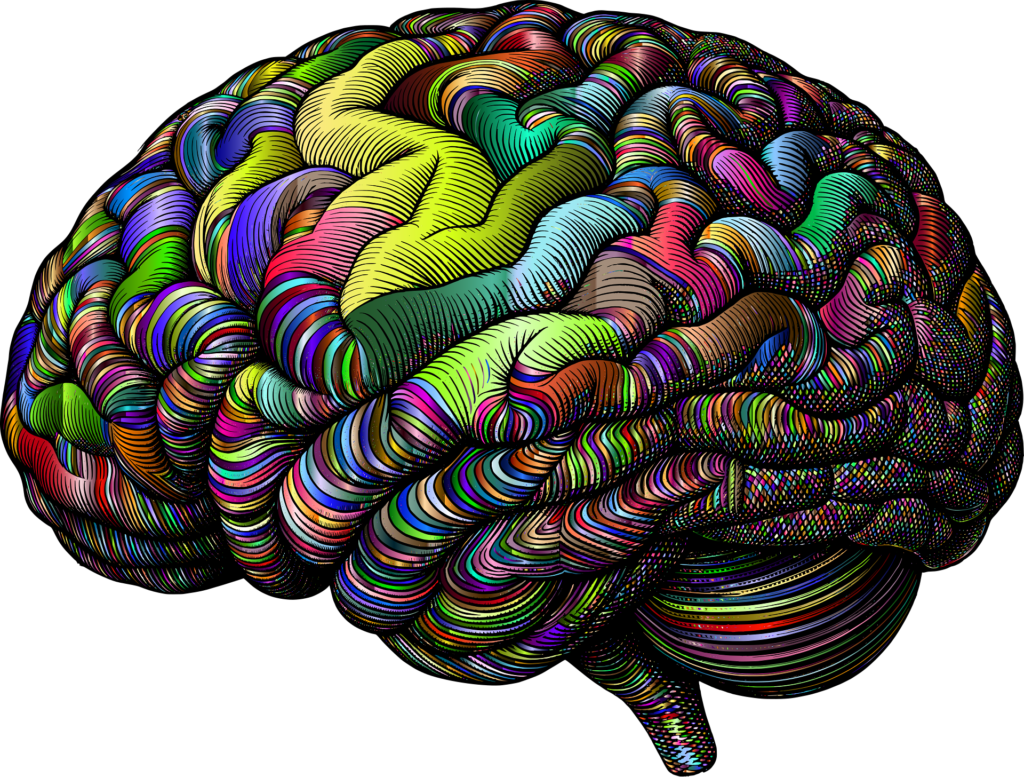
When did we decide that playing was something we were supposed to grow out of?
Somewhere between building LEGO towers, inventing imaginative games and becoming responsible adults, play seems to have acquired a rather suspicious reputation.
Apparently, once we’re grown up, everything needs a purpose.
We exercise to get fitter. We read to become more knowledgeable. We learn something new to improve our skills.
And if we spend an afternoon building something entirely unnecessary out of LEGO?
Well, surely we should have been doing something more productive!
But what if playing is productive in ways we don’t always recognise?
Your brain hasn’t retired from curiosity
One of the wonderful things about the human brain is its ability to keep learning and adapting throughout life.
That’s neuroplasticity — the brain’s capacity to change its connections and activity in response to experience, learning and practice.
And although learning can change as we grow older, our brains don’t suddenly announce:
“Right. That’s enough new information. We’ve completed the syllabus.”
Thank goodness, because I still have rather a lot of questions!
Curiosity gives us a reason to explore.
When something catches our interest, we’re more inclined to pay attention, investigate and discover what happens next.
And that matters because attention and motivation are closely connected with learning and memory.
Researchers have found that curiosity can influence how information is processed and remembered. The brain’s motivation and memory systems work together in ways that can help us learn from experiences we find interesting.
In other words, wanting to know can help create the conditions for learning.
Sometimes the expert needs to be the beginner
Here’s something I’ve been thinking about lately.
As we become experienced in something, people naturally begin to see us as knowledgeable, capable and perhaps even the person who has all the answers.
But expertise is not the end of learning.
If anything, I think it should make us even more curious.
Perhaps growing expertise shouldn’t mean growing out of curiosity.
There’s something rather liberating about trying something we don’t think we’re particularly good at.
Building something without instructions.
Learning a new dance.
Trying to draw something and discovering that our artistic masterpiece looks suspiciously like a potato.
Or joining an activity simply because we’d like to enjoy it, without having to lead it.
When we’re beginners, we get to ask questions, experiment, make mistakes and discover things.
And sometimes that’s exactly what we need.
What has LEGO got to do with your brain?
I love LEGO as a metaphor for neuroplasticity.
Imagine having a collection of bricks.
You can build something, take it apart, try another arrangement, discover that the roof doesn’t fit and start again.
The bricks haven’t disappeared. You’ve simply found another way to use them.
Now, our brains are considerably more complicated than a box of colourful plastic bricks, and they don’t literally dismantle and rebuild themselves like a LEGO castle.
But the comparison helps us imagine something important.
What we already know doesn’t have to be the only way we do things.
New experiences can challenge familiar patterns, encourage us to consider alternatives and give us opportunities to practise different skills.
And play can provide a wonderful setting for that exploration.
Not because every game produces measurable changes in the brain, but because playful activities can invite curiosity, experimentation, creativity and learning.
Sometimes the greatest discovery begins with two little words:
“What if?”
Play doesn’t need a performance review
Now here’s the part I particularly like.
Not every playful experience needs to become a personal development project.
You don’t have to measure how many new connections your brain has made after building a LEGO giraffe.
You don’t need a certificate for laughing with your friends.
And you certainly don’t need to turn every hobby into a side business!
Sometimes we can play simply because it’s enjoyable.
The science of adult play and playfulness is still developing, but research has explored their potential roles in creativity, psychological wellbeing and learning.
That doesn’t mean play is a miracle cure or that having fun prevents cognitive decline.
It means there’s good reason to remain interested in how curiosity, play and learning contribute to our lives.
And perhaps that’s enough reason to make a little more room for them.
Because even as we grow older, wiser and more experienced, there’s still a part of us that wants to discover what happens when we try something different.
And I, for one, have no intention of telling that part of my brain to grow up!
The Neuro-Action Step for This Month
Give yourself permission to be a beginner.
This December, choose one little thing to explore simply because you’re curious.
Build something. Draw something. Try a new game. Learn an unusual fact. Make up a playful story. Ask a question you’ve never thought to ask before.
And here’s the important part:
You don’t have to be good at it.
You don’t even have to finish it.
Just notice what happens when you replace “Am I doing this properly?” with “I wonder what happens if…”
No performance required.
No productivity targets.
Just a little curiosity, a little play and perhaps a little laughter along the way.
Because your brain still wants to play.
And you’re allowed to join in. ❤️
I am easily contacted on email info@lottemikkelsen.com, or mobile +44 (0) 7736341717.